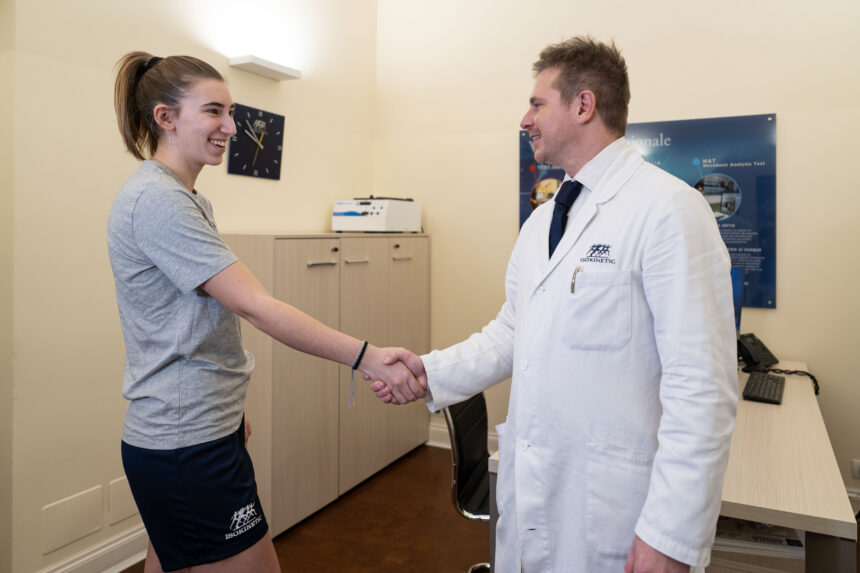
In Robert Maigne’s school, manual medicine is not conceived as a sequence of maneuvers, but as a complete medical act: listening, observing, palpating, distinguishing. It is a way of interpreting pain that compels one to ask a decisive question: does the symptom truly originate where the patient feels it, or is that pain the peripheral expression of something else?
Manual medicine is a medical discipline, grounded in neurophysiological and biomechanical principles, dedicated to the diagnosis and treatment of reversible functional disorders of the musculoskeletal system.
There are pains that mislead, and it is precisely in these cases that Maigne’s teaching still holds its strength today: to remind us that the site of pain does not always coincide with its origin—and that, before treating, one must understand.
The Central Role of the Physician
In Robert Maigne’s view, manual medicine is medicine. It is not a repertoire of techniques applied to a painful area, but an extension of the medical examination. The hand does not replace clinical reasoning—it complements it. For this reason, its center of gravity is not manipulation, but differential diagnosis, patient assessment, the exclusion of red flags, and the ability to distinguish a reversible functional disorder from a structural, neurological, visceral, or systemic condition that requires a different pathway. Diagnosis and treatment are inseparable and remain within medical expertise.
DDIM: A Clinical, Not Radiological Concept
In Maigne’s manual medicine, the central reference is DDIM—Minor Intervertebral Pain Dysfunction. Beyond its historical definition, its practical meaning remains highly relevant: a segmental spinal pain can exist, be clinically significant, and reversible even without corresponding to a major lesion visible on imaging.
It is a valuable concept because it compels the physician not to mistake a finding for a diagnosis. A disc protrusion, mild discopathy, or degenerative changes may be present without truly explaining the clinical picture; likewise, a well-structured clinical pain pattern may suggest a segmental source even when MRI does not provide a convincing answer.
A pain may be the expression of something else.
When Pain Is the Periphery of a Problem
The most interesting insight of Maigne’s school is this: a pain may be the expression of something else. The physician does not stop at the point where the patient indicates the symptom, but assesses whether that point is truly the source of the problem or rather the peripheral endpoint of a spinal disorder.
Within this framework falls the classic semiotics of Maigne’s school, including the cellulo-teno-periosteo-myalgic syndrome—that is, a set of peripheral painful signs involving the skin and subcutaneous tissues, muscles, tendon insertions, and periosteum, which may be located within the same territory as the affected spinal segment.
This is where diagnostic rigor truly makes the difference. Treating a painful tendon is one thing; asking whether that tendon pain is primary or part of a broader segmental chain is another. This kind of reasoning does not unnecessarily complicate clinical practice—it makes it more precise and seeks to give meaning to the patient’s pain.
The Examination Does Not Seek Only the Painful Point
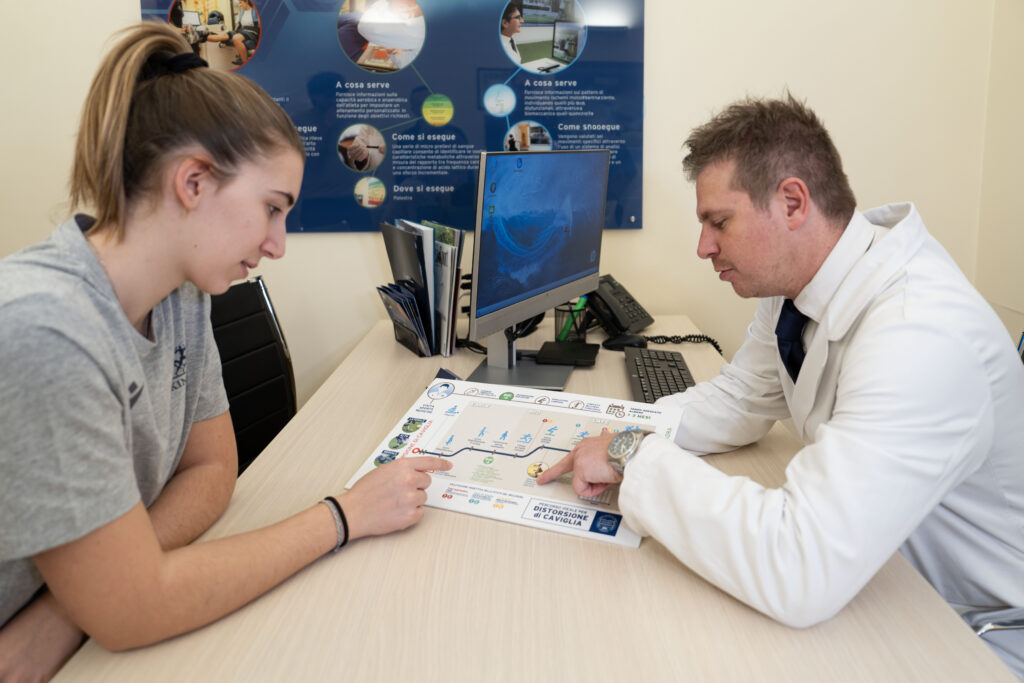
According to Maigne, the clinical examination is one that seeks coherence—coherence between history-taking, the movement that reproduces the symptom, segmental palpation, pain topography, and the peripheral distribution of signs. It does not settle for broad labels such as “cervicalgia,” “low back pain,” or “pubalgia.” Instead, it aims to determine whether the condition is truly local or whether the periphery reflects a central disorder.
At a time when there is a tendency to rely too quickly on imaging or region-based diagnoses, this approach preserves a rare medical rigor: first, a clinical hypothesis is constructed; only then is it decided whether and how to treat.
The most classic example is thoracolumbar junction syndrome, often simply referred to as Maigne’s syndrome. A 2022 review describes it as a frequently unrecognized yet treatable cause of low back pain; it may present not only with lumbar pain, but also with pain in the iliac crest, gluteal region, groin, lower abdomen, or even in a pseudo-visceral distribution.
This explains why it is so easily missed: the symptom directs attention elsewhere. In sports, the issue is even more evident, as these patterns can be mistaken for peripheral conditions, myofascial overload, abdominal wall disorders, or incidental findings in the lower lumbar spine.
An article on manual therapy calls precisely for this kind of reasoned caution: there is a “grey zone” in which clinical reasoning can improve the management of pain and injury in athletes, avoiding both rigid biomechanical dogma and the a priori rejection of manual therapy.
In Maigne’s manual medicine,
the hand comes after.
The Hand Comes After.
All of this leads to a very simple conclusion: in Maigne’s manual medicine, the hand comes after. After the history. After differential diagnosis. After ruling out what must not be missed. After determining that the condition is compatible with a functional disorder and that manual treatment has clinical relevance.
Only then do mobilization or manipulation become useful tools—not because they magically “put something back into place,” but because they can reduce pain, improve a window of mobility, modulate muscle guarding, and make the patient more receptive to movement.

The Dialogue with Physiotherapy
Manual medicine alone is not enough. The WHO recommendations for “chronic primary low back pain” emphasize a holistic, integrated, and coordinated approach that includes education, exercise, and certain physical therapies, including spinal mobilization. This means that manual therapy has a role, but not as a standalone treatment—rather as part of an active rehabilitation program.
A 2023 review on manual therapy in sports points in the same direction: its value increases when it is used to facilitate the process, not to replace it. In practical terms, the hand can open a window; it is then physiotherapy that consolidates the result through active mobility, motor control, strength, endurance, load progression, and return to sport-specific activity.
The Role of the Physician Remains Central
In this model, the physician is not an ancillary figure. They are the clinician who must decide whether the pain the patient reports is truly where it appears to be. It is the physician who must distinguish between a functional disorder and a condition that must not be missed. It is the physician who must read the signs, recognize when the periphery is the language of the spine, and determine whether manual medicine is truly indicated.
Above all, it is the physician who must place that decision within a shared plan with the physiotherapist. If this level is lost, manual medicine is reduced to mere technique. If, instead, it remains anchored in diagnostic rigor, it becomes a medicine of clinical precision.
The patient does not need only treatment, but an intelligent diagnosis.
And this is precisely the most relevant meaning of manual medicine according to Maigne today: to remind us that the patient does not need only treatment, but an intelligent diagnosis. They need a physician capable of understanding when the visible symptom is merely the surface of the problem, when pain that appears peripheral actually originates from a segmental source, and when the hand can become a bridge toward active rehabilitation.
Because manual medicine, when it is truly medicine, is not measured by the gesture that is seen, but by the quality of the reasoning that precedes it and by the functional recovery it makes possible.

ESSENTIAL BIBLIOGRAPHIC REFERENCES
- Locher H, Bernardotto M, Terrier B, et al. ESSOMM European core curriculum and principles of manual medicine. Manuelle Medizin. 2022.
- Locher H. Manual medicine, manual treatment: principles, mode of action, indications and evidence. Unfallchirurg. 2021;124(6):433-445.
- Meloche JP, Bergeron Y, Bellavance A, et al. Painful intervertebral dysfunction: Robert Maigne’s original contribution. Headache. 1993;33(6):328-334.
- Randhawa S, Garvin G, Roth M, et al. Maigne Syndrome – A potentially treatable yet underdiagnosed cause of low back pain: A review. J Back Musculoskelet Rehabil. 2022;35(1):153-159.
- Short S, Tuttle M, Youngman D, et al. A Clinically-Reasoned Approach to Manual Therapy in Sports Physical Therapy. Int J Sports Phys Ther. 2023;18(2):523-536.
- World Health Organization. WHO guideline for non-surgical management of chronic primary low back pain in adults in primary and community care settings. 2023.
- Narenthiran P, Smith C, Richards J. Does the addition of manual therapy to exercise therapy improve pain and disability outcomes in chronic low back pain: a systematic Dos
- Santos ECS, Dos Santos AT, da Silva NA, et al. Effectiveness of adding manual therapy to exercise for pain and disability in chronic non-specific low back pain: a systematic review and meta-analysis. 2026.