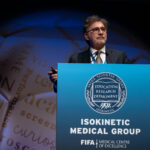
Every four years, the FIFA World Cup represents the pinnacle of international football. Millions of fans follow the tournament, focusing on goals, spectacular moments and match results. Yet behind every performance lies a much broader process built on preparation, injury prevention, rehabilitation and the continuous monitoring of each athlete’s physical condition.
The FIFA World Cup 2026 is once again demonstrating how Sports Medicine has become a fundamental pillar of performance. The good news is that, at Isokinetic, many of the same principles applied to professional footballers can make a meaningful difference for recreational athletes too.
Whether it’s a weekend run, a game of padel, a road race or a gym workout, preparing properly helps reduce the risk of injury while improving performance, health and overall wellbeing.
Preparation Starts Long Before Kick-off
When we watch a FIFA World Cup match, we see ninety minutes of football. Yet every player reaches that moment after weeks, months and often years of dedicated preparation.
Physical condition is not determined by technical training alone. Mobility, strength, muscular balance and movement quality are continuously assessed to reduce the risk of injury and enable athletes to perform at their full potential.
The same principle applies to every athlete. Proper preparation means understanding your body, identifying any potential risk factors, and following a training programme tailored to your goals and level of activity.
Isokinetic Verona: Injury Prevention Is Part of Performance
In modern football, medical intervention is no longer limited to treating injuries once they occur. Increasingly, sports physicians, physiotherapists and strength and conditioning coaches work together to identify early warning signs that could develop into more significant problems.
Muscle overload, restricted mobility or altered movement patterns can all be early warning signs that deserve attention before they develop into injuries requiring time away from sport.
Recreational athletes, on the other hand, often underestimate these warning signs, continuing to train despite pain or unconsciously altering their movement patterns to compensate for discomfort.
Early intervention can often prevent longer periods away from sport and support a safer, more effective return to activity.
Recovery Is Not a Break — It’s Part of Training
One of the clearest lessons from the FIFA World Cup is the importance of recovery management. Between matches, the medical team works to help players recover as effectively as possible through personalised strategies that combine clinical monitoring, physiotherapy, therapeutic exercise and careful load management.
Recovery is not simply a break from training; it is an essential part of the preparation process.
The same applies to recreational athletes. Giving the body the time it needs to adapt to training not only improves performance but also helps reduce the risk of overload injuries and recurrence.
At Isokinetic, Every Athlete Is Different
Two people may play the same sport, be the same age and even sustain a similar injury, yet require completely different rehabilitation pathways.
Modern Sports Medicine is built on this very principle: tailoring both assessment and rehabilitation to the individual, taking into account their unique characteristics, the sport they practise and the goals they want to achieve.
There is no one-size-fits-all protocol. Instead, there are personalised rehabilitation pathways designed around each patient’s needs, continuously monitored and adapted throughout the recovery process.
From International Competition to Everyday Clinical Practice
The FIFA World Cup showcases the very highest level of professional sport, yet the principles that guide medical teams at the tournament are the same ones that can be applied every day in clinical practice.
At Isokinetic Verona, every patient’s journey begins with a comprehensive assessment and continues through personalised programmes that integrate Sports Medicine, physiotherapy, therapeutic exercise and functional monitoring. The goal is not simply to relieve pain, but to guide each individual towards a safe and confident return to physical activity in the best possible condition.
Because, regardless of their level of participation, every athlete deserves a pathway tailored to their individual needs
The FIFA World Cup 2026 continues to deliver unforgettable moments and outstanding performances, but it also conveys an important message: performance begins long before kick-off and extends well beyond the final whistle. Preparation, injury prevention and recovery are not reserved for elite athletes—they are the foundations of Sports Medicine and can help anyone enjoy sport more safely, more confidently and for longer.