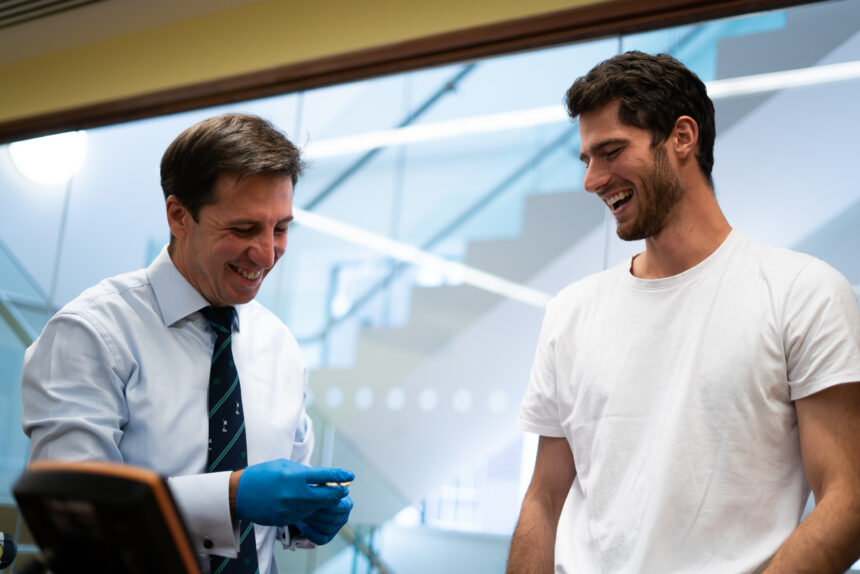
Running pain changes the way you land on your foot, and every stride starts to feel uncertain. At Isokinetic London, the process begins with assessing the cause, not just the symptom, with the aim of a gradual, structured return to running.
Whether you are preparing for your first 10K, training for a marathon or returning after surgery, the goal at Isokinetic London is the same: to understand why the injury happened and build a gradual, structured return to running.
Common running injuries
Running injuries often develop gradually, especially when training load increases faster than the body can adapt. The most common include:
- Patellofemoral pain syndrome (“runner’s knee”)
- Patellar and Achilles tendinopathy
- Shin splints (medial tibial stress syndrome)
- Calf and hamstring strains
- Hip and groin pain
- Plantar fasciitis
- Stress fractures
- Rehabilitation after knee surgery
Two runners with the same painful spot can have different causes: strength deficits, poor load management, restricted mobility, a previous injury or an inefficient movement pattern. That is why every case needs an individual assessment at Isokinetic London.
Why Rest Alone Isn’t Enough at Isokinetic London
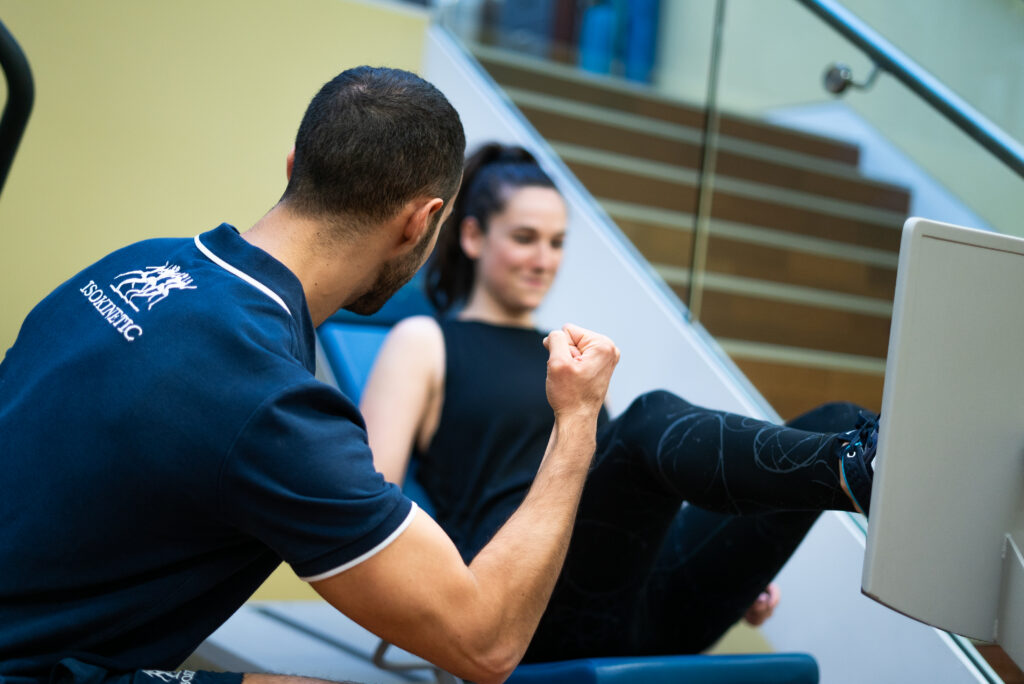
Rest reduces symptoms, but it does not correct strength, movement mechanics or load tolerance. Runners who return without working on these areas face a higher risk of a quick relapse.
A specialist rehabilitation pathway at Isokinetic London can include:
- Clinical assessment
- Strength testing
- Mobility work
- Gait and movement analysis
- Progressive loading
- Gym-based conditioning
- Return to running planning
- Injury prevention strategies
Who Supports You at Isokinetic London
Isokinetic London brings together doctors, rehabilitation specialists and performance professionals who support patients at every stage of recovery. The team includes Dr Jesús Olmo (Medical Director and Physiatrist), Dr Matthew Stride (Sport Physician) and Alessandro Compagnin (Head of Rehabilitation).
Knee rehabilitation: A step-by-step progression
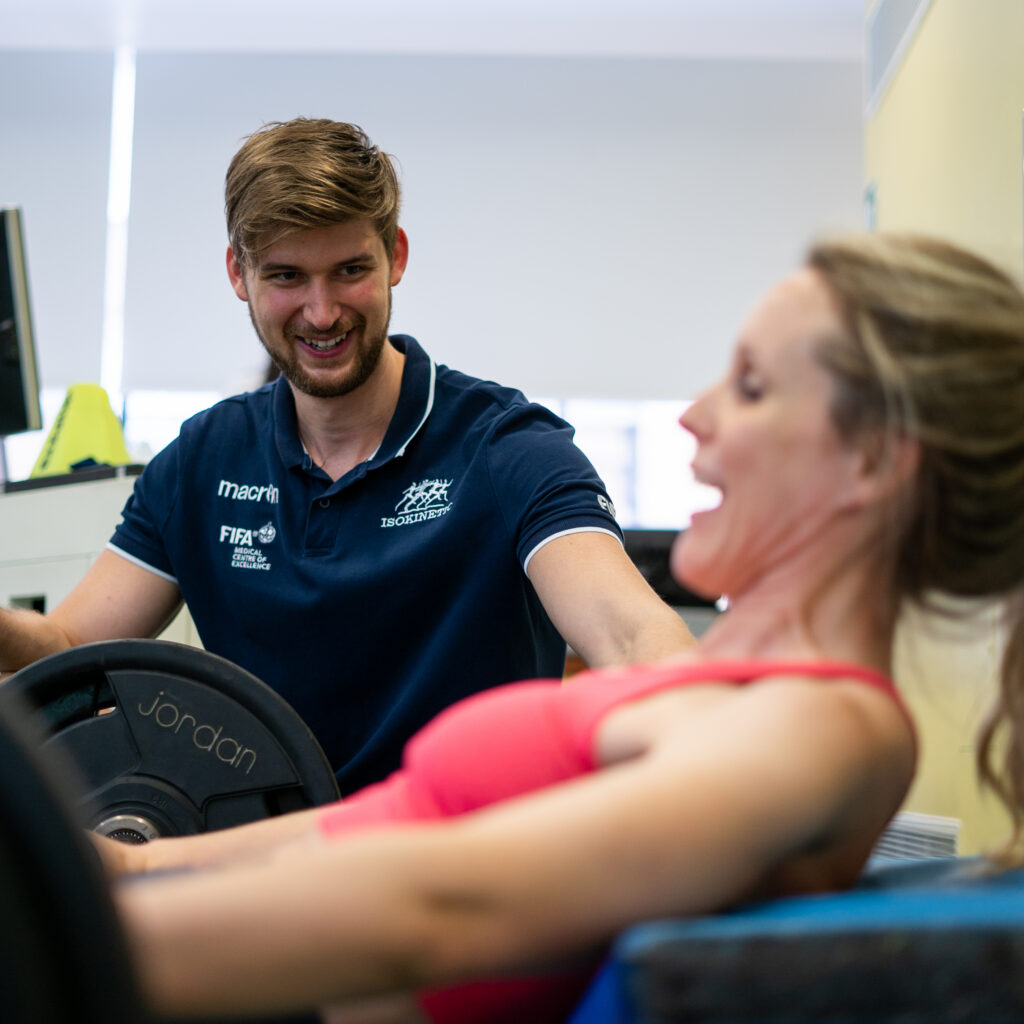
Knee pain is one of the most common reasons runners seek help. Whether the issue is patellofemoral pain, tendon overload, meniscus irritation or recovery after cruciate ligament reconstruction, rehabilitation follows a defined progression:
- Pain and load management
- Restoring mobility
- Rebuilding strength
- Single-leg control
- Running-specific conditioning
- Treadmill or gradual-intensity running
- Return to running on terrain and in sport-specific activity
After cruciate ligament reconstruction, returning to running is a major milestone. Rehabilitation manages this transition through defined criteria and progressive loading, set individually by the medical team.
Beyond the Symptom: Getting Back to Running Stronger
Many runners don’t just want the pain to stop. They want to run better, train consistently and avoid repeating the same injury. Working beyond the symptom at Isokinetic London helps you understand what your body is doing, build resilience and progress with confidence.
Is Sports Massage Enough?
Sports massage can help with muscle tension and short-term recovery. But if the pain keeps returning, a thorough assessment, strength work, movement analysis and changes to training load are usually needed. Manual therapy can be part of the pathway, within a broader plan.
FAQ
When should I see a running injury specialist?
You should seek specialist advice if pain persists, gets worse, changes your stride or keeps returning after rest.
Does Isokinetic London treat runner’s knee pain?
Yes. Isokinetic London offers assessment and rehabilitation for knee pain and running-related injuries.
Is sports massage enough for a running injury?
Sports massage can help reduce muscle tension in the short term, but persistent running injuries usually need assessment, strength work, load management and rehabilitation.
Want the latest Isokinetic London news?
Read all our articles