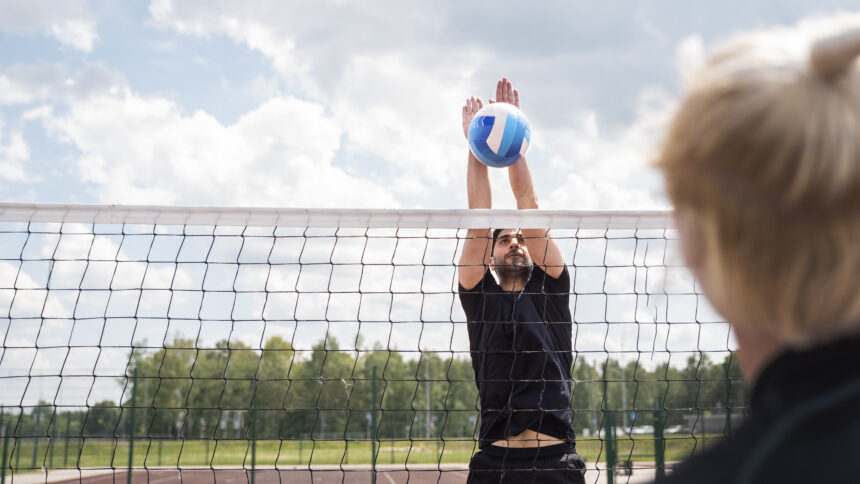
Shoulder injuries in volleyball account for between 22% and 33% of all overuse injuries. The most common conditions include Impingement Syndrome, followed by injuries related to shoulder instability.
Fammi sapere se preferisci una versione più tecnica o più semplice!
It is estimated that high-level athletes who train 16–20 hours per week perform approximately 40,000 spikes in a year. In beach volleyball players, shoulder issues have been observed in about 43% of cases, compared to 16% in indoor players. This can be explained by the fact that, with only two players on each team, beach volleyball involves a higher number of ball contacts per player compared to indoor volleyball. The number of spikes—especially those performed with external shoulder rotation—is the main source of risk.
Prevalence, Symptoms, and Clinical Tests
Impingement Syndrome, or subacromial impingement syndrome, is one of the most common injuries among volleyball players. It is caused by the repetitive overhead movements typical of the sport. The condition occurs when the rotator cuff tendons are compressed between the acromion and the head of the humerus, leading to inflammation and pain, and resulting in reduced joint mobility.
The inflammation resulting from tendon compression can lead to shoulder stiffness and reduced mobility, making it difficult to perform more technical movements.
The main symptoms of Impingement Syndrome include: pain localized in the upper part of the shoulder that worsens with overhead movements, reduced joint mobility, and a loss of strength.
There are specific clinical tests, such as the Neer test and the Hawkins test, that assess shoulder impingement. In some cases, diagnostic imaging—such as MRI or ultrasound—may be necessary to evaluate the extent of inflammation or tendon damage.
Treatment and Exercises
The goal of treatment is to reduce pain, improve shoulder mobility, and prevent further damage. The main therapeutic approaches include:
- Manual therapy: mobilization and manipulation techniques aimed at improving joint mobility and reducing stiffness.
- Strengthening exercises: targeting the rotator cuff and scapular muscles to improve shoulder stability and reduce overload.
- Stretching and flexibility exercises: aimed at increasing the elasticity of the muscles and tendons involved, helping to prevent stiffness that could worsen the impingement.
- Proprioception: training neuromuscular control and coordination to prevent incorrect or inadequate movements.
- Pain reduction techniques: such as physical therapy modalities (ultrasound, laser therapy) to reduce inflammation and acute pain.
In cases of persistent pain that does not respond to physiotherapy, local corticosteroid injections may help reduce inflammation.
If physiotherapy and conservative treatments fail to produce significant improvement, surgery may be required.
Prevention Is Possible
Impingement Syndrome is a common injury among volleyball players, but if properly managed, it can be effectively prevented or treated. Proper technique, muscle strengthening, and adequate recovery are essential to avoid the onset of this condition. At the first sign of symptoms, early intervention is crucial to prevent further damage and support a better recovery of shoulder function.
Dr. Andrea Tieghi (Isokinetic Turin)
Dr. Alberto Scavone (Isokinetic London)