
The 2026 FIFA World Cup has once again brought anterior cruciate ligament (ACL) injuries into the spotlight. Some players saw their tournament come to an abrupt end, like Amadou Onana, while others, including Rodrygo and Xavi Simons, were ruled out before it had even begun. The question that inevitably follows is always the same: when can they return to play? At Isokinetic, that’s exactly the question we set out to answer.
In professional football, players return to competition on average seven to nine months after ACL reconstruction. But the timeline answers only part of the question. Sports medicine distinguishes between return to sport — the point at which an athlete resumes competition — and return to performance, when they are once again able to perform at their previous level.
The figures show why this distinction matters. Around 90% of professional players return to play, but only just over half regain their previous level of performance. During the first two seasons after returning, many players record fewer minutes and lower performance levels, with figures beginning to improve only from the third season onwards — and not for everyone.
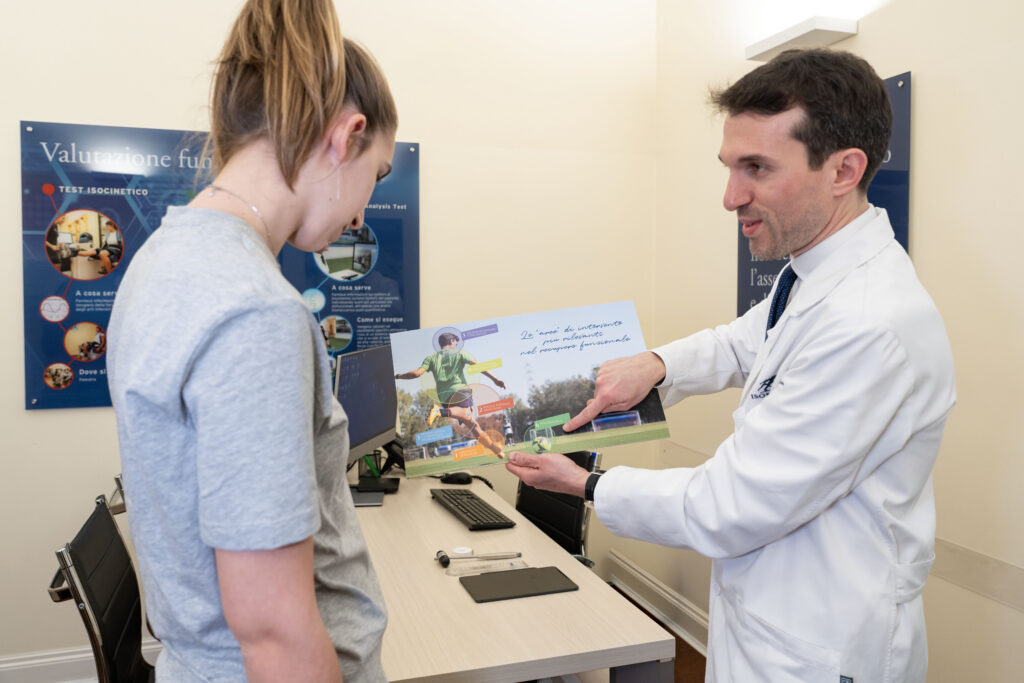
The reason goes beyond the knee itself. The ACL continuously provides the central nervous system with sensory information about joint position and movement. When the ligament ruptures, this communication is disrupted, forcing the brain to develop new motor control strategies. Movements that were once automatic demand greater attention and increased visual monitoring, often resulting in hesitation during a change of direction or a split-second delay in foot placement.
This is why rehabilitation has evolved. Alongside strength, mobility and stability, modern programmes now include dual-task training, visual stimuli and split-second decision-making exercises. The goal is not simply to restore muscle strength, but to make movement automatic again, allowing athletes to perform instinctively under the demands of competition.
Then there is the psychological side of recovery. Kinesiophobia — the fear of sustaining another injury — can influence running, jumping and tackling even after the knee has fully recovered. Research has shown that an athlete’s psychological readiness to return is often a stronger predictor of successful return to sport than many physical performance tests. Confidence and physical recovery must progress together: when they are out of sync, the risk of returning to play too soon increases.
Recovery does not end when the knee is strong. It ends when the athlete trusts every movement again.
Dr Marco Gastaldo
Medical Doctor | Specialist in Physical and Rehabilitation Medicine
Isokinetic Medical Group Torino
FIFA Medical Centre of Excellence

