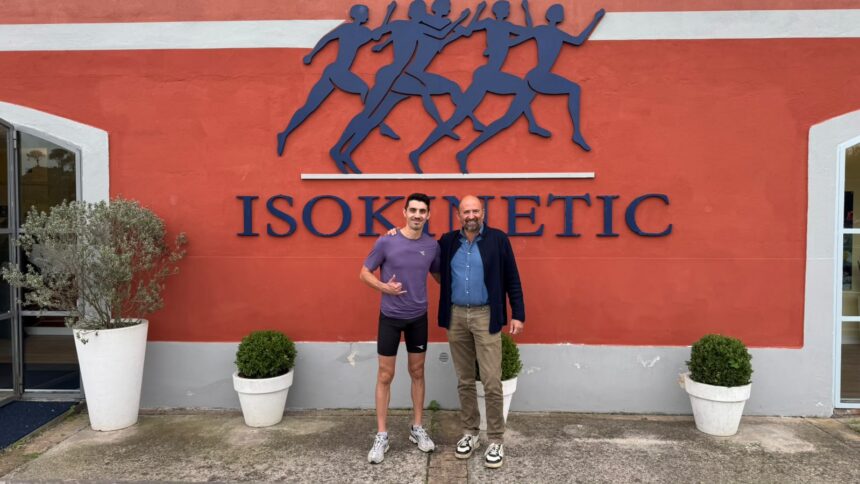
Before starting a new phase of training, it’s worth taking the time for an assessment. With this in mind, Massimo Stano, Olympic champion in the 20 km race walk at Tokyo 2020, returned to Isokinetic Rome for an isokinetic test ahead of his departure for Australia.
The visit marked a continuation of a relationship that began following a previous injury. This time, the Italian race walker returned to the Rome centre to assess his muscle strength at the start of a new training phase.
What is the isokinetic test?
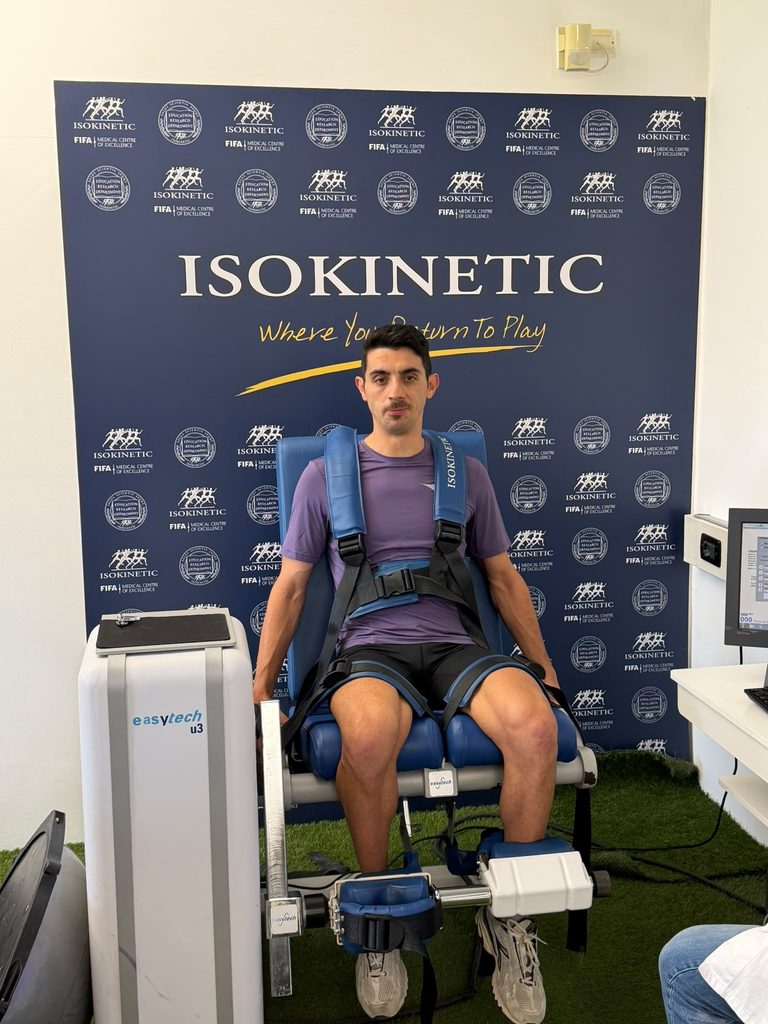
The Isokinetic Test is an instrument-based assessment that measures muscle strength using specialised equipment. It allows the performance of both limbs to be compared and any differences to be quantified, providing data to be interpreted in the context of the clinical assessment and the athlete’s specific needs.
Its value lies in the ability to complement subjective perceptions with objective measurements, providing information that can facilitate communication between the athlete, healthcare professionals and coaching staff.
For Stano, the visit to Isokinetic Rome came at a specific point in his schedule: ahead of his departure for a training period in Australia. Rather than starting a new rehabilitation programme, he underwent an assessment in preparation for the upcoming training phase.
Massimo Stano and His Relationship with Isokinetic Rome
Stano’s first visit to Isokinetic Rome took place following an injury. His return for isokinetic testing marked a new chapter in this relationship, driven by a different need in his athletic preparation.
Key figures at the Rome centre include Giovanni Maria d’Orsi, Medical Director, and Giovanni De Sario, Head of Rehabilitation Specialists, who are part of the medical and rehabilitation team.
The Olympic champion’s visit also provided an opportunity to continue discussions with his staff. What began with a request for isokinetic testing opened the door to further potential assessments of neuromuscular function.
The visit therefore combined a specific objective — measuring muscle strength before departure — with the opportunity to continue discussions between the centre and the athlete’s staff.